The best slopes in Europe for Skki Trikke
We checked out three legendary European resorts to see how they fit for the Skki Trikke
…whether you’re a beginner “Trikker” or chasing adrenaline on longer, more demanding runs.
1. Hintertux, Austria - a glacier open all year round
The Hintertuxer Gletscher in Austria’s Tyrol is one of the few resorts in the world where you can ski year-round – the season runs practically from late September to the end of June. That makes it a great choice for trying out the Skki Trikke outside the classic winter season.
Scale and terrain
The resort offers around 64 km of runs and 20 lifts, spread across three glacier sectors between 1,500 and 3,250 m above sea level. Run breakdown: approx. 17 km blue, 35 km red, and 12 km black – a clear majority of intermediate runs, ideal for riding a Skki Trikke, where a wide slope lets you make the most of carving technique.
For who?
Hintertux works well both for beginner Trikkers (wide blue runs in the lower sections, a free Flohpark area for first attempts) and for more advanced riders – the long, 12-kilometer black run “Schwarze Pfanne” is quite an experience. It’s also a great choice for families with children, and for anyone who wants to ride outside the classic winter season – in summer or early autumn.
Attractions
Beyond the skiing itself, Hintertux offers glacier tours, viewpoints over the Gefrorene-Wand-Spitzen peaks, and family zones for kids. It’s also the only place in the region where, in summer, you can combine riding Skki Trikke with mountain hiking.
Prices and passes
The day pass for the 2025/2026 season is priced individually depending on the date (peak-season prices are higher than at opening and closing). There’s also the Zillertaler Superskipass, valid across all resorts in the Zillertal valley (Hochzillertal-Hochfügen, Zillertal Arena, Mayrhofen, Zillertal 3000) – a sensible option if you’re planning to mix in skiing at several villages during your stay. A €2 deposit for the chip card is added to every price. Children born after January 1, 2020 (the exact birth year depends on the season) ride free when accompanied by an adult.
Restaurants
The resort has a dozen or so food and drink spots – from mountain huts (Sommerbergalm) to restaurants at the base stations, serving Tyrolean cuisine and quick lunch options between runs.
Accommodation
Hintertux is a small, intimate village at the foot of the glacier, so the accommodation base is more modest than in Val Thorens or St. Moritz – mostly guesthouses, B&Bs, apartments, and smaller family-run hotels. Prices here are the most affordable of the three: apartments and holiday homes start at around €70-80 per night, and rooms in guesthouses or 3-star hotels from around €90-120 per night in season. It’s worth booking ahead – outside the season, prices drop by as much as 30-40%.
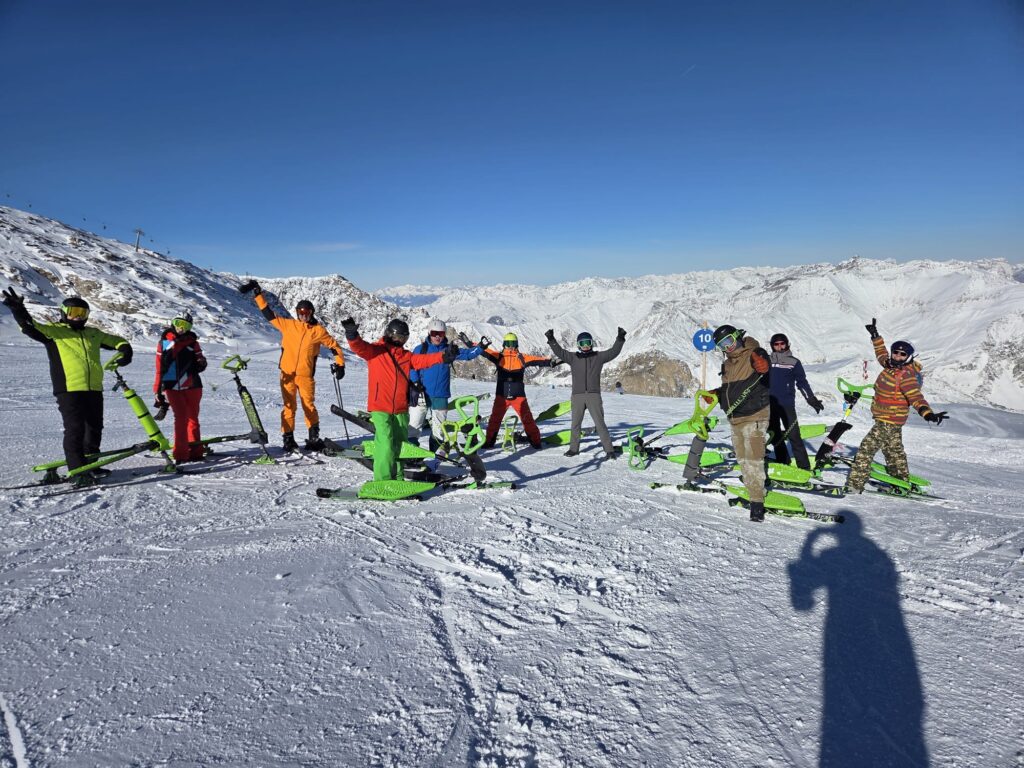
2. Val Thorens, France - the heart of the Three Valleys
Val Thorens is France’s highest-altitude resort (base at around 2,300 m above sea level) and part of Les Trois Vallées – the largest connected ski area in the world.
Scale and terrain
The Val Thorens/Orelle area alone covers around 150 km of runs and 32 lifts spread over 86 slopes. For comparison – the full Three Valleys pass (together with Méribel and Courchevel) opens up access to more than 600 km of runs and 300 slopes. It’s a huge space where Trikkers of every skill level will find something for them – from wide, gentle runs for beginners in the lower part of the valley (ideal for a first attempt at the Skki Trikke) to the steep runs by Cime de Caron.
For who?
Val Thorens is exceptionally versatile: families and beginners will appreciate the well-developed learning zone and the gentle runs around the center, while advanced riders will value the sheer size of the terrain and the ability to switch up their route every day thanks to the link to Méribel and Courchevel. It’s the best pick of the three if your group has a mixed range of skill levels – and also for anyone who wants an active nightlife alongside the skiing. In Val Thorens you don’t just ride, you travel. Get ready for long runs with stunning views.
Attractions Val Thorens is famous for its après-ski scene – numerous bars with terraces and live music, spas and pools in the hotels, plus toboggan runs and freeride zones for the most experienced riders. It’s also one of the few resorts offering free cross-country trails.
Prices and passes (2025/2026 season, main period December 20, 2025 – May 3, 2026)
- Val Thorens/Orelle day pass (adult): approx. €71–74
- Full Three Valleys day pass (adult): approx. €82
- Pedestrian day pass: approx. €30.50
- Three Valleys 6-day pass: from approx. €92.50 upward (depending on zone and dates)
- “Family Flex” seasonal pass (2+ children): approx. €1,041 per person
- Children up to age 4 – free pass
Prices are dynamic – lower at the start and end of the season, higher over the Christmas-New Year period and during February school holidays.
Restaurants
By far the richest of the three resorts on this front – dozens of restaurants on the slopes and in the center, from traditional Savoyard fare (fondue, tartiflette) to Michelin-starred venues, plus a dozen or so bars and après-ski clubs open late.
Accommodation Val Thorens is a modern resort built entirely for skiing, with offerings ranging from modest studios to luxury five-star ski-in/ski-out hotels. Prices here are noticeably higher than in Hintertux: apartments and studios start at around €60–80 per night (outside peak season), 3-star hotels average around €370-400 per night, and 4-star hotels can run €600-700 per night in season. The Christmas and school-holiday periods are the most expensive – worth booking well in advance for those dates.
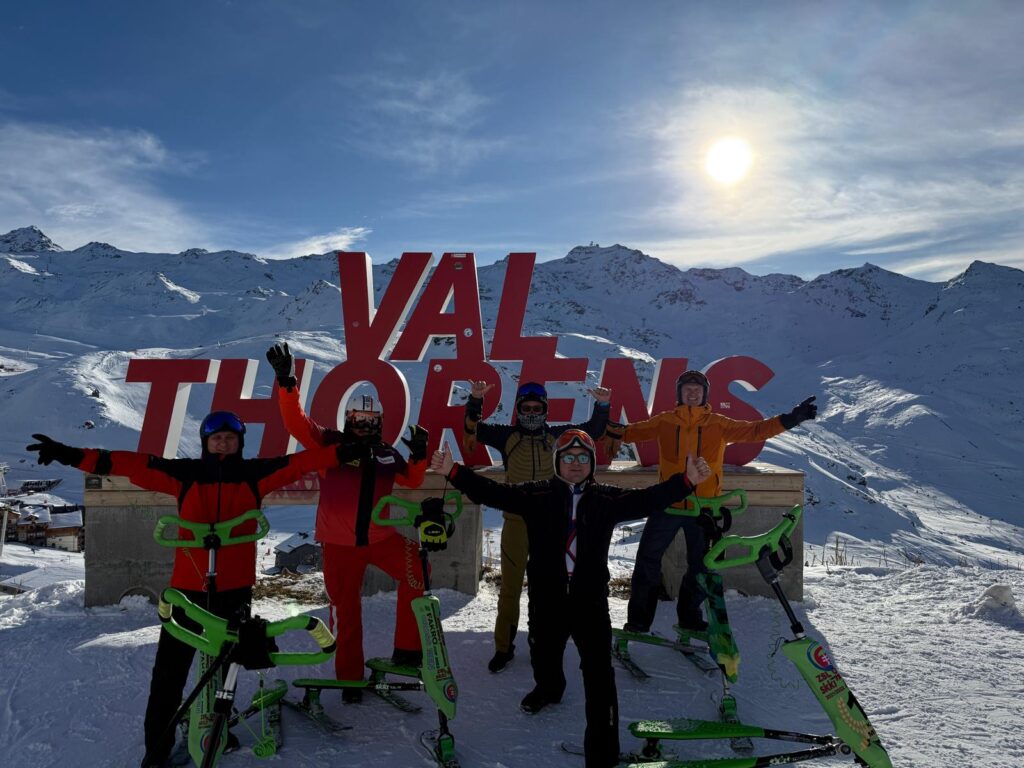
3. St. Moritz, Switzerland - elegance and high-alpine character
St. Moritz in the Upper Engadin is the birthplace of world winter tourism – host of two Winter Olympic Games. It’s also the most prestigious, and technically the most varied, of the three resorts covered here.
Scale and terrain
The “Engadin St. Moritz Mountain Pool” area totals around 325-350 km of runs across four main sectors: Corviglia/Piz Nair (approx. 155 km, the most family-friendly), Corvatsch, Diavolezza/Lagalb, and several smaller ski fields. Elevations range from 1,720 to 3,303 m above sea level. St. Moritz is known for a more demanding, high-alpine terrain profile than Val Thorens or Hintertux – Corvatsch and Diavolezza offer steep, technical red and black runs, including the longest glacier run in Switzerland.
For who?
This is the best fit for intermediate and advanced riders. The Corviglia sector (home to the famous “White Carpet” run and the 2-kilometer Olympic downhill) is gentler and suits the start of a Skki Trikke adventure, while Corvatsch and Diavolezza are already noticeably steeper – it’s worth starting the day at Corviglia. It’s also an ideal destination for anyone after an elegant, more relaxed getaway rather than a loud après-ski scene.
Attractions
St. Moritz isn’t just about the slopes – think riding on a frozen lake, the bobsled track, night skiing (Switzerland’s longest floodlit run, 4.2 km, on Corvatsch, open Fridays), and a distinctly elegant, calmer après-ski atmosphere than in the Alps’ party resorts.
Prices and passes
- Local day pass: from approx. €81 (76 CHF)
- 6-day pass: up to approx. €402 (376 CHF)
- Full “Engadin St. Moritz” pass (350 km, all sectors): from approx. €1,177 (1,100 CHF) per season
- Groups of 10+ – 10% discount
- Early booking (“Snow Deal”) – discounts of up to 30%
This is by far the most expensive of the three resorts, reflecting the town’s premium character.
Restaurants
The mountain restaurants in St. Moritz have a reputation as culinary temples – from classic Swiss chalets serving fondue and rösti to fine-dining venues at the Murtèl station on Corvatsch. There are fewer dining spots here than in Val Thorens, but the quality ranks among the highest in the Alps.
Accommodation St. Moritz is one of the most prestigious ski addresses in the world, and it shows in accommodation prices. The cheapest rooms in hostels or 1-star guesthouses start at around €150-170 per night, 3-star hotels average around €300-340 per night, 4-star around €400-460 per night, and luxury 5-star properties (such as the legendary Kulm Hotel or Badrutt’s Palace) can run from around €1,000 up to several thousand euros per night at the peak of the season. This is by far the most expensive accommodation base of the three resorts – it’s worth looking for deals outside the Christmas-New Year period, when prices can be as much as half.
Whichever you choose – remember that the Skki Trikke is designed for riding on marked, groomed runs, so it’s worth checking in advance on the chosen resort’s website whether the equipment is permitted on the slopes.
Prices and information on run mileage come from official resort and ski-industry websites for the 2025/2026 season and are subject to change – before your trip, we recommend checking the current price list on the resort’s own website.
Like this article?
Share on Facebook
Share on Twitter
Share on WhatsApp
Share on Email
COMMENTS